Advertising has always evolved with technology from print and TV to digital and now artificial intelligence (AI). But AI isn’t just another tool; it’s rewriting the rules of creative strategy, audience targeting, and campaign execution.
Models from OpenAI and Google are leading this revolution, empowering marketers to ideate faster, personalize smarter, and execute campaigns with data-driven precision.
The creative process once relied on human brainstorming and intuition. Today, AI tools can generate hundreds of ad ideas, headlines, and visuals in seconds.
Platforms like OpenAI’s GPT models and Google’s Gemini analyze trends, audience behavior, and brand tone to deliver ready-to-use creative options. Instead of replacing copywriters or art directors, AI acts as a creative partner, expanding possibilities and accelerating ideation.
This shift means brands can test multiple narratives, refine tone, and adapt to trends in real time turning creativity into a measurable, iterative process.
Traditional targeting relied on broad demographics. AI has introduced predictive analytics that can anticipate consumer intent and personalize ads at scale.
With machine learning algorithms, marketers can segment audiences by behavior, mood, or purchase likelihood not just age or gender. This enables hyper-personalization, where ad content dynamically adjusts to individual preferences.
For instance, AI-powered Dynamic Creative Optimization (DCO) tools can change visuals, copy, and offers based on real-time data. This personalization drives higher engagement, stronger conversion rates, and better ROI.

AI has transformed media buying and optimization through programmatic advertising where algorithms decide, bid, and deliver ads across platforms in milliseconds.
These systems continuously learn from performance data, automatically reallocating budget to high-performing creatives and channels. AI also enhances marketing attribution, connecting ad exposure to conversions more accurately than ever.
In short, what used to take days of manual reporting and adjustment now happens automatically improving efficiency, reach, and budget utilization.
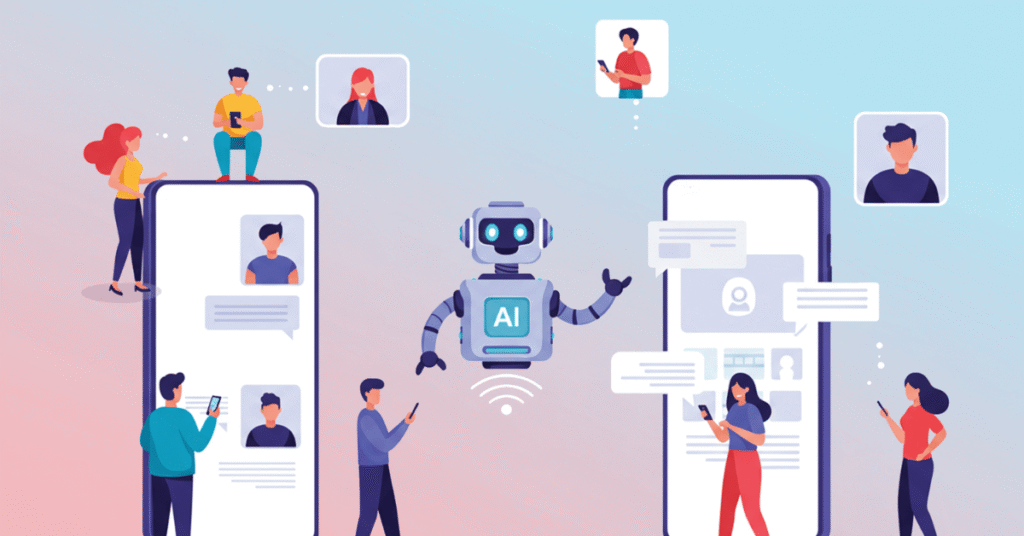
AI isn’t just running campaigns; it’s talking to customers. Chatbots and voice assistants now act as 24/7 brand representatives, answering queries, recommending products, and guiding users through purchase funnels.
This form of conversational marketing blends convenience with personalization. Each interaction generates new data, helping brands refine customer journeys and deepen loyalty.
AI-powered engagement isn’t just reactive it’s proactive, predicting customer needs before they’re expressed.
Generative AI is redefining how brands produce content. Text-to-image and text-to-video tools can now create ad visuals, product imagery, and even short films from simple prompts.
This democratizes production allowing smaller brands to compete with big players by producing high-quality content quickly and affordably.
However, with this power comes responsibility. Marketers must ensure authenticity, maintain brand integrity, and uphold ethical standards to prevent misuse or misinformation.
AI takes marketing analytics beyond reporting. It detects trends, forecasts outcomes, and recommends next steps. Predictive modeling helps marketers anticipate performance while anomaly detection flags potential issues early.
Campaigns no longer rely on retrospective analysis, AI enables real-time optimization, ensuring each marketing dollar works harder.
This data-driven decision-making shifts advertising from reactive to strategic, aligning creativity with measurable business outcomes.
The next phase of advertising will blend human insight with machine intelligence. Expect AI-driven creative studios, cross-channel orchestration, and emotion-aware marketing that responds to consumer sentiment in real time.
The brands that thrive will be those that combine data-driven precision with human empathy, turning AI from a tool into a true strategic ally.
In conclusion, AI is not replacing creativity, it’s amplifying it. With tools from OpenAI, Google, and beyond, advertisers can think faster, personalize deeper, and measure smarter.
In this new era, the best campaigns won’t just be seen; they’ll be felt powered by intelligence, guided by strategy, and rooted in the timeless art of human connection.